Paul Scully Opens NSW Modular Housing EOI For Faster Home Construction
Planning Minister Paul Scully has opened an EOI inviting businesses to expand prefabricated and modular housing manufacturing in NSW, with a 3 August deadline.
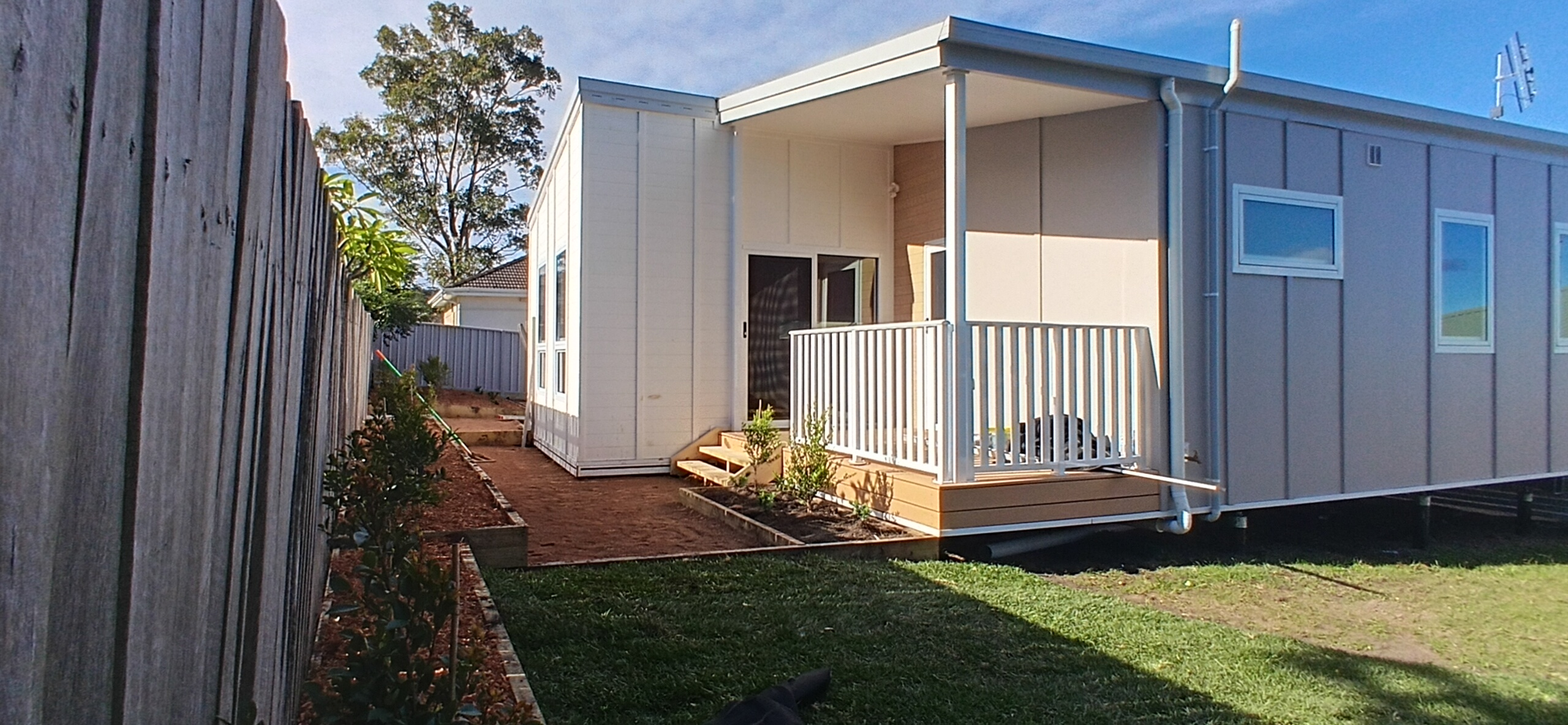
Homes NSW image of housing at Gallop Street, Berkeley. The new EOI seeks businesses able to expand prefabricated and modular housing production in NSW.
Planning Minister Paul Scully has opened the next procurement stage in NSW's modular housing push, with businesses now invited to establish or expand manufacturing facilities that can produce prefabricated building components or large-scale modular housing for higher-density housing types.
The NSW Government announced the expression of interest on 2 July and said it is seeking businesses with expertise in advanced manufacturing, prefabrication and modular construction. The EOI is aimed specifically at higher-density housing and includes designs from the state's mid-rise pattern book. For Greater Sydney readers, the useful distinction is that this is not the original budget-day modular housing idea. It is a live market test asking whether businesses are ready to invest, manufacture and deliver at scale.
The release says the Modern Methods of Construction Industry Expansion Program is intended to grow local manufacturing, strengthen supply chains, create skilled jobs and accelerate housing delivery. Government support could include financial help, suitable land, agreements to purchase output such as housing or public facilities, or other proposals that represent value for money and support a sustainable industry. The EOI closes at 9am AEST on Monday, 3 August 2026.
That deadline gives the announcement a sharper edge. Sydney's housing shortage has produced years of policy language about supply, density, planning reform and construction productivity. A procurement window asks a more practical question: which firms can actually build the components, meet regulatory requirements, finance operations, maintain quality and deliver homes people will live in? The government says proposals will be assessed on commercial readiness, capability and capacity to deliver at scale. Those criteria should matter as much as any promise about speed.
Modular and prefabricated construction can help with some bottlenecks, but it is not magic. Factories can standardise parts of the build, reduce waste and shorten on-site construction time. They can also fail if designs do not suit local planning rules, if banks and insurers lack confidence, if builders cannot integrate systems on site, or if residents associate modular homes with lower quality. The release acknowledges part of that challenge by pointing to a new regulatory framework and certification system for modern methods of construction, backed by $1.6 million, so prefabricated buildings can be recognised in NSW law and integrated into planning approvals.
The link to the mid-rise pattern book is especially relevant for Sydney and Surrounds. Much of the housing debate in established suburbs sits between two unpopular extremes: detached homes that cannot absorb enough growth and towers that many communities resist. Mid-rise housing, if well designed and close to transport and services, is one of the ways Sydney can add homes without making every growth discussion feel like a fight over high-rise redevelopment. Modular manufacturing could help only if the products are good enough for real streets, not just diagrams.
The EOI also connects housing to jobs. If NSW can build a stronger local manufacturing base for housing components, the benefit is not only faster homes. It could support skilled manufacturing, logistics, design, certification and installation work. For Western Sydney and other employment corridors, that matters because housing supply and job supply should not be treated as separate files. A city that imports every solution will struggle to build both affordability and industrial capability.
For local residents, the test remains concrete. Does this process select credible operators? Do early projects move faster than conventional delivery? Are homes durable, attractive, insurable and connected to transport, schools and services? A factory-built component does not solve a bad site decision. But if procurement, certification and design line up, the EOI could become one of the more practical housing-delivery steps to watch this winter.
From the desk. Sydney and Surrounds is a practical local newsroom for Greater Sydney. If there is something in your suburb that deserves more attention, we would like to hear about it.