Guy Hudson Loam Bio CEO Move Puts University Of Sydney Soil Science Into Founder Scale-Up Story
Loam Bio co-founder Guy Hudson is moving to executive chairman as Rob Hranac becomes chief executive, marking a scale-up phase for a soil-carbon company built from University of Sydney research.
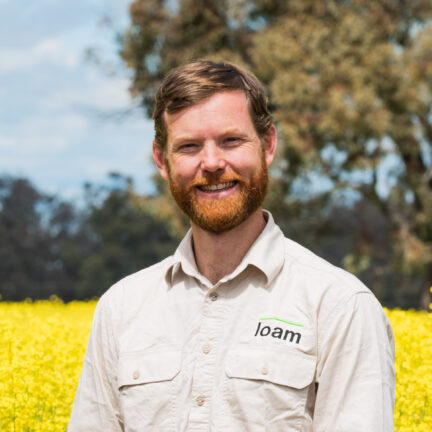
Loam Bio co-founder Guy Hudson. Loam Bio says Hudson is transitioning to executive chairman as Rob Hranac becomes chief executive.
Loam Bio has given today's pack its founder-focused business story, with the Orange-based soil-carbon company naming Rob Hranac as chief executive while co-founder Guy Hudson moves into the executive chairman role. Business News Australia reported on 24 June that the change takes effect from 1 July and marks a new phase for a company founded in 2019 that has raised more than $150 million and is pushing further into the United States.
The story belongs in Sydney and Surrounds because Loam's origin is not only regional NSW. Business News Australia reported that the company was founded to apply work by University of Sydney Professor Peter McGee on the role microbes play in carbon sequestration in soil. That link connects university research, NSW agriculture, climate technology and founder execution. It is the kind of business story that does not start in a CBD office tower but still draws on Sydney's research base, capital networks and professional ecosystem.
Hudson co-founded Loam Bio with Tegan Nock, Mick Wettenhall and Guy Webb. The company uses naturally occurring soil microbes to help farmers store more carbon in agricultural soils, with the promise of improving land outcomes and creating new carbon opportunities for growers. Business News Australia reported that Loam has built research and development hubs in Australia and the United States and run hundreds of field trials across Australia, the US, Canada and Brazil.
The leadership change says something about the point a founder-led company reaches when it moves from proving an idea to scaling operations. Hudson is shifting toward long-term strategy, partnerships and governance. Hranac brings experience in agricultural technology and climate-focused ventures, including senior roles in the United States. That matters because Loam is no longer only trying to explain a scientific concept. It is trying to build a reliable business across markets, farming systems, carbon-credit rules, product delivery, investor expectations and international growth.
The Australian reported that Loam is eyeing a possible Australian sharemarket listing in the longer term, while Hranac said there is work to do before the business reaches the financial structure required for an IPO. It also reported that Hudson will continue working on investors and strategy, with backers including Mike Cannon-Brookes' Grok Ventures and Marc Benioff's TIME Ventures. Those details show the scale of the ambition, but they also show the risk. Climate-tech companies can attract strong capital when the story is compelling; they still have to prove repeatable customer value season after season.
For farmers, the practical question is whether the technology improves resilience, productivity or revenue in a way that justifies adoption. Soil carbon is not a simple software metric. It depends on climate, crop type, measurement, verification, markets, regulation and trust. A founder in this category has to deal with science, sales and credibility at the same time. Overpromising can damage an entire sector; under-explaining can stop a useful technology from being adopted.
For Sydney's startup audience, the Loam story is a useful reminder that founder success is not only consumer apps, fintech and artificial intelligence. Some of the most important companies are built around long research cycles, field trials, physical products and customers who do not care about startup language. Loam's connection to University of Sydney science also shows why local research institutions matter to the broader NSW economy. A lab insight can become a company, but only if founders can translate it into a product farmers trust.
For Sydney and Surrounds, Hudson's move is the local-business lesson: a founder's job changes as the company changes. Early founders often have to carry vision, fundraising, hiring, product definition and customer proof all at once. A scale-up sometimes needs a different operating structure without losing the original mission. Loam's next test is whether the new leadership model can keep the company connected to Australian roots while building the global agricultural business its investors and customers are now expecting.
From the desk. Sydney and Surrounds is a practical local newsroom for Greater Sydney. If there is something in your suburb that deserves more attention, we would like to hear about it.