Western Sydney Housing Contribution Shift Changes Development Costs From 1 July
From 1 July 2026, former Western Sydney Special Infrastructure Contribution areas transition into the Housing and Productivity Contribution scheme, reshaping development costs.
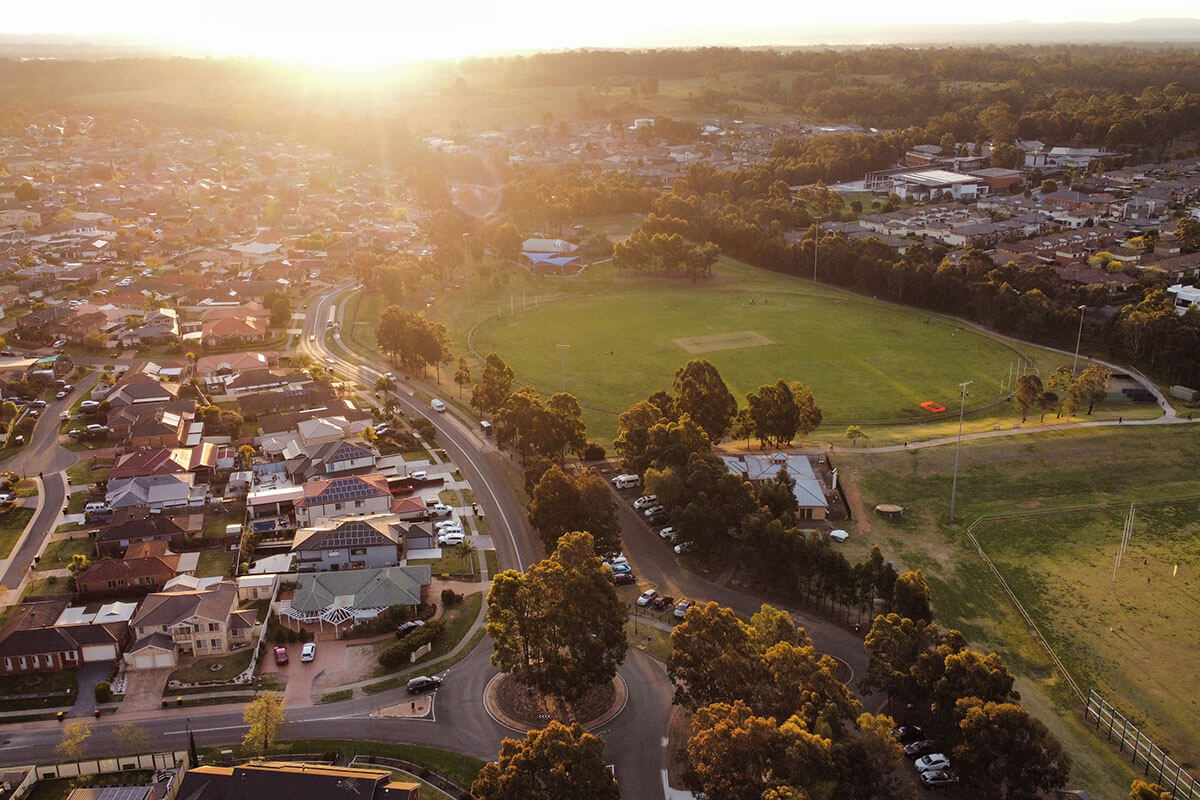
Aerial housing and green-space image used by NSW Planning for the Housing and Productivity Contribution.
Western Sydney enters a new infrastructure-contributions setting today, with the Housing and Productivity Contribution now applying to relevant development applications in former Western Sydney Special Infrastructure Contribution areas.
The Department of Planning says the Western Sydney Growth Areas and Western Sydney Aerotropolis Special Infrastructure Contributions have transitioned into the Housing and Productivity Contribution scheme from 1 July 2026. The change completes a more consistent state infrastructure contributions framework across Greater Sydney, the Lower Hunter, Central Coast and Illawarra-Shoalhaven. For residents, the issue is not the name of the charge. It is whether fast-growing suburbs get infrastructure in step with housing growth.
The contribution applies through the NSW Planning Portal to relevant development applications in the former Western Sydney SIC areas. The Greater Sydney base component now applies to those applications, while biodiversity and transport contributions have been shifted into strategic components. The department says transitional arrangements will recognise previous SIC payments to avoid duplicate infrastructure charges, and certain industrial developments may be exempt from HPC charges until 1 July 2029 where SICs were already paid at subdivision.
That sounds technical because it is. Infrastructure contributions sit behind the visible parts of development: roads, open space, transport links, biodiversity offsets and other systems needed when land moves from paddocks, industrial edges or low-density uses into new suburbs. When the contribution system is unclear, developers argue that projects become harder to price. When the contribution system is too weak or too late, residents argue that growth arrives without the schools, roads, parks and services promised around it.
Western Sydney is the place where those tensions are most visible. The Aerotropolis, Bradfield, Luddenham, growth-area suburbs and transport corridors carry a large share of the state's housing and employment promises. A planning contribution rule may not make headlines like a new station or motorway, but it influences the cost and sequencing of the projects that eventually shape those places.
The department frames the reform as a clearer, fairer and more consistent way to fund infrastructure needed to support housing growth. The practical test is whether it reduces disputes and speeds up delivery without simply moving costs around. Developers will look for certainty on rates, credits, exemptions and timing. Councils and communities will look for confidence that contributions are connected to visible infrastructure, not absorbed into a distant system that feels detached from local pressure.
There is also a housing-affordability tension. Any cost attached to development can eventually flow into project feasibility, land values, buyer prices or rental supply. At the same time, growth without infrastructure creates its own cost for households: longer school runs, longer commutes, fewer local services and more pressure on roads. The public argument is often framed as fees versus affordability, but the real question is what homes cost when infrastructure is delayed.
The timing matters because Greater Sydney is already being reshaped by other housing policies, including transport-oriented development and accelerated precinct work around high-growth stations. The state wants more homes near transport and employment. That only works if the supporting infrastructure is planned and funded in a way that residents can understand.
For local readers, the immediate change will be most relevant to landowners, developers, planners, builders, councils and community groups tracking development applications. For everyone else, it is worth watching as a delivery signal. If the new contribution framework works, residents should eventually see growth areas with clearer funding paths for roads, transport, parks and biodiversity commitments. If it does not, Western Sydney will keep seeing the same cycle: approvals first, local infrastructure arguments later.
From the desk. Sydney and Surrounds is a practical local newsroom for Greater Sydney. If there is something in your suburb that deserves more attention, we would like to hear about it.